You protect your investment
Equipment that still works well stays in use. You replace only what really needs replacing.
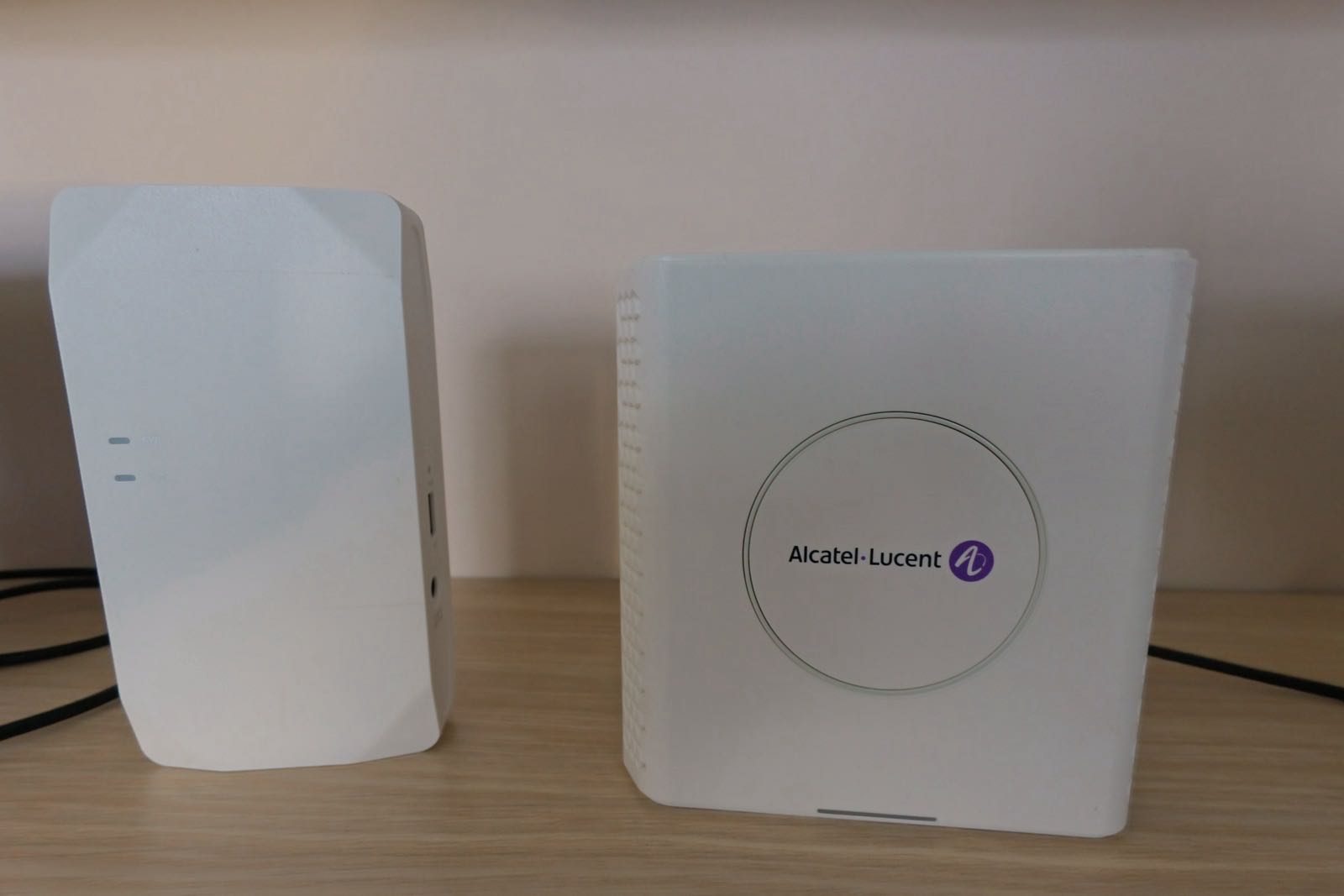
We connect new IP and SIP technologies to your existing call server, phones and lines. The move happens gradually, without downtime and without throwing away equipment that still does its job.
Traditional phone lines and old call servers are being phased out, and new services run over the internet. A hybrid solution lets you move at your own pace: old and new work together as one system.
Equipment that still works well stays in use. You replace only what really needs replacing.
Site by site, department by department, without a big-bang switch and its risks.
We plan the move so the phones keep working throughout, for employees and clients alike.
You see and configure the old and new parts of the system from one place.
The most common cases clients come to us with.
We connect your call server to the operator's SIP trunk, so you keep working as before, with the same numbers.
The room phones and cabling stay, while reception and the offices get modern IP features.
We connect call servers at different sites into one network, so internal calls between them work as if you were in the same building.
We add an IP part next to it and move users over gradually, until the old equipment can be safely switched off.
We list the call server, phones, lines and numbers: what stays and what needs replacing.
We agree on the order, deadlines and dates, aligned with your operations.
We connect old and new, test, and move users over in phases.
We stay with you after go-live for changes, extensions and faults.
Telephony is full of abbreviations. Here is what they mean, without the jargon.
It is a system in which old and new telephony work together. For example, the existing call server and analogue phones keep working, and we add IP phones and internet lines alongside them. To the user, everything looks like one system.
VoIP (Voice over IP) means voice travels over the computer network and the internet, just like e-mail or video, instead of over traditional phone wires. The phone then plugs into the same network as the computer.
SIP is the “language” IP phones, call servers and operators use to set up, redirect and end a call. Thanks to this common standard, equipment from different manufacturers can work together.
A SIP trunk is a phone line over the internet provided by a telecom operator. Instead of several physical lines entering the building, one internet connection carries many simultaneous calls and your numbers. We connect and configure the SIP trunk with your call server.
The call server is the “brain” of a company phone system: it assigns extensions, routes calls, handles voicemail and internal calls. A PBX is a traditional call server, and an IP-PBX is a modern one that runs over the computer network.
A gateway is a “translator” between the old and new worlds. It connects analogue phones, fax machines or old lines to the IP system, so older equipment can stay in use.
No. That is exactly the point of a hybrid solution: we keep equipment that still works well and replace only what is necessary. At the start we assess together what stays and what is due for replacement.
In most cases, yes. Numbers are assigned by the operator, and moving them to a SIP trunk is arranged with them. We coordinate the whole process so clients keep calling the same numbers.
We plan the move in phases and at times that suit you, and the old system keeps running until the new part has been verified. The goal is for employees and clients not to notice the change, except for the new features.
Send us what you have today (call server, number of phones and sites), and we will propose a migration plan.
Contact us