New infrastructure
For buildings under construction or renovation: network architecture, structured cabling and active equipment, coordinated with the other systems and contractors on the project.

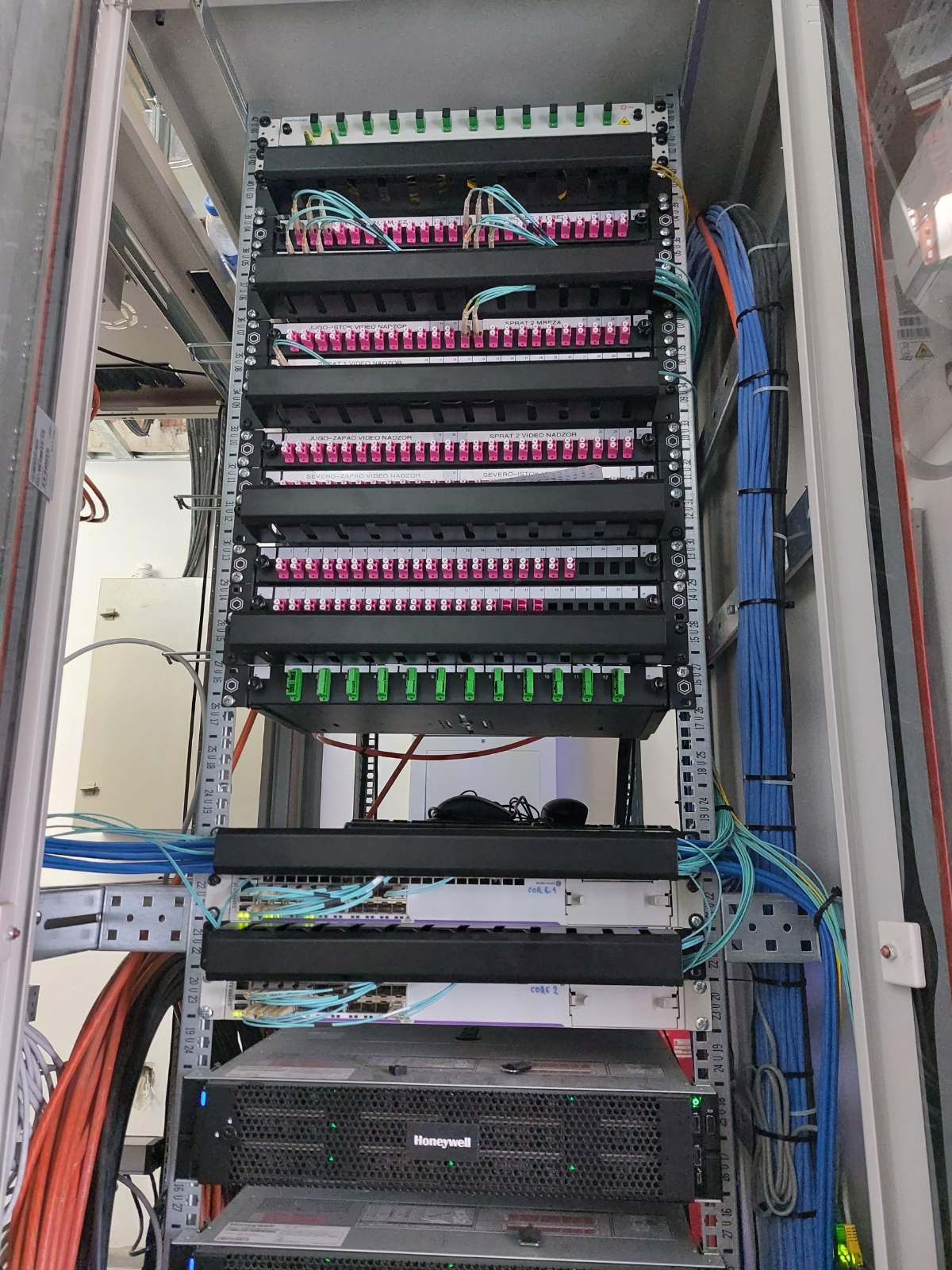
We design, build and maintain the networks that airports, energy systems, hospitals and manufacturing run on, from a single building to dozens of connected sites.
Telephony, access control, information displays and business applications share the same foundation. That is why we design it as critical infrastructure, not as a collection of devices.
Redundant links and equipment, designed so that the failure of one component does not stop the business.
Capacity planned for the real load, with priority for voice, video and critical applications.
Segmentation and access control built into the architecture from the start, not added later.
An architecture that takes on new sites, users and services without rebuilding.
For buildings under construction or renovation: network architecture, structured cabling and active equipment, coordinated with the other systems and contractors on the project.
For organisations with several buildings: a secure, redundant WAN architecture that connects head office, branches and plants into one manageable environment.
For existing networks that have outgrown their purpose: assessment, a phased modernisation plan without downtime and maintenance under a defined SLA.
Technologies: Alcatel-Lucent Enterprise · HPE Aruba Networking · Huawei · Fortinet
More than 20 sites across Montenegro, with communication on which the management of the power system depends.
A redundant telephony and network platform that connects all sites into one environment.
sites in one redundant network
A LAN (local area network) connects all devices within one building or complex: computers, phones, cameras and Wi-Fi. A WAN connects remote sites, for example a head office in Belgrade and a branch in Niš, so everyone works as if they were in the same building.
A switch connects devices within the same network and directs data to the right device in the building. A router connects different networks, for example your network to the internet or to another site.
A planned cabling installation: cables from the outlets to the network cabinet, labelled, tested and documented. Good cabling lasts a long time and makes every future change easier.
Passive equipment is cables, outlets, cabinets and panels. Active equipment is switches, routers and access points, the devices that manage traffic in the network.
Having backup paths and backup equipment. If one cable, device or link fails, traffic automatically takes another path and the network keeps working.
Typical signs are slow applications, dropped calls and video meetings, untidy cabinets without documentation and equipment that the manufacturer no longer updates.
It depends on the size of the building and the number of sites. After a site visit we provide a plan with clear deadlines, and we coordinate the work with your operations or with other contractors on the project.
The first conversation is with an engineer, not a salesperson. We will look at your requirements and propose an approach that makes sense for your organisation.
Book a call